Samsung Wallet/Pay – Digital Payment Platform
Samsung Wallet/Pay – Digital Payment Platform
Samsung Wallet/Pay – Digital Payment Platform
Samsung Wallet/Pay – Digital Payment Platform
Samsung Wallet/Pay – Digital Payment Platform
Samsung Wallet/Pay – Digital Payment Platform
Samsung Wallet/Pay – Digital Payment Platform
Samsung Wallet/Pay – Digital Payment Platform
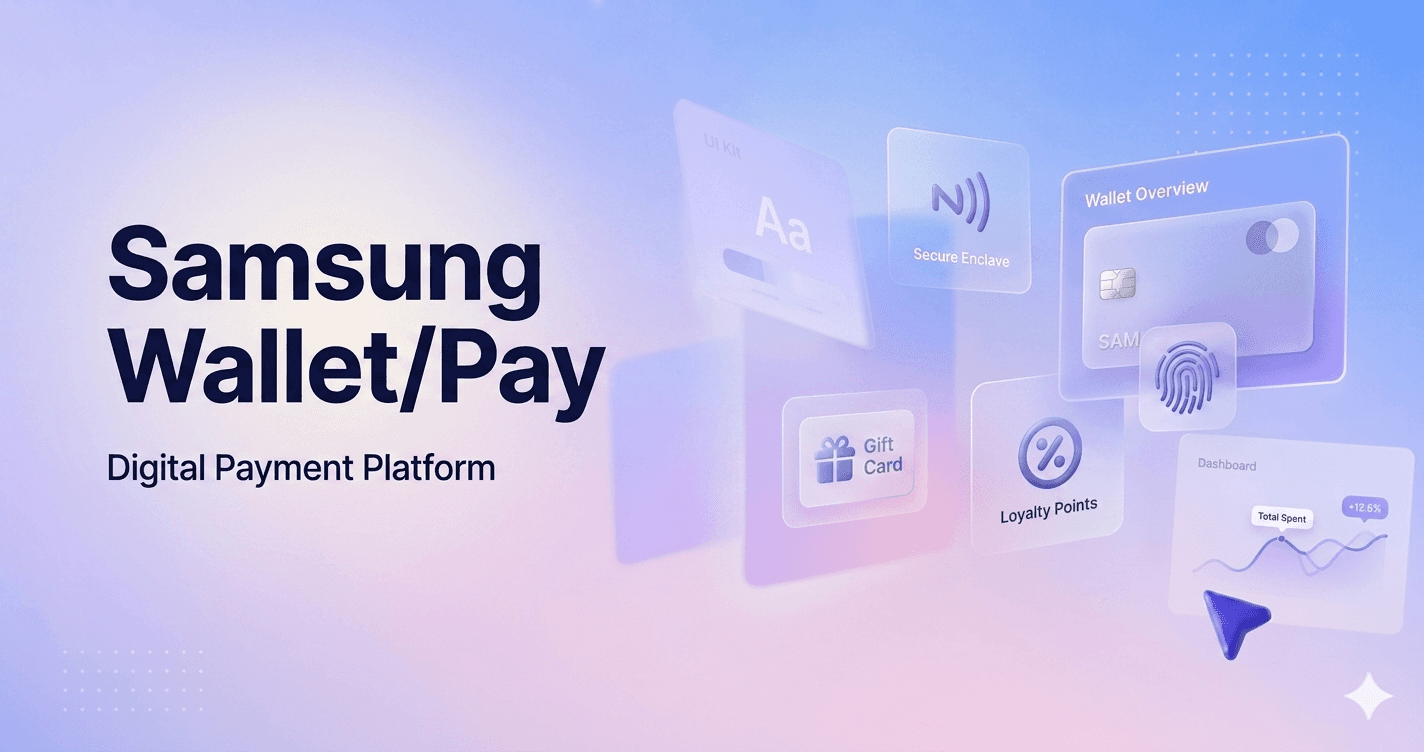
Samsung Wallet/Pay – Digital Payment Platform
Samsung Wallet/Pay – Digital Payment Platform
Client
Samsung Wallet/Pay – Digital Payment Platform
Year
2025
Category
Fintech Industry
Live Version
View Now
Overview
Redesign unified Samsung’s fragmented wallet and payment experiences across phone and watch. The new platform simplifies onboarding and payments, elevates trust through visible security, and integrates cards, loyalty, and passes into one intuitive app.
Executive Summary
We reimagined Samsung Wallet/Pay end-to-end, merging disparate features, clarifying security, and streamlining key tasks. The redesign increased adoption, transactions, and satisfaction while establishing a scalable foundation for future financial services.
Problem Statement
Multiple apps and inconsistent flows eroded trust and usability. Users faced confusing setup, unclear security, weak card management, and uncertainty around merchant acceptance, leading to low adoption and high onboarding drop-off.
Research & Discovery
Competitive review: Apple Pay, Google Pay, regional apps
Security perception studies; merchant/partner research
Personas: tech-savvy early adopter; security-conscious mainstream; cash-preferring skeptic
Key insights: show security without friction; unify wallet and loyalty; surface merchant acceptance; integrate tightly with the Samsung ecosystem.
Design Process
Stakeholder and bank workshops; IA redesign; security-first patterns; journey maps from onboarding to payments. Lo-fi to hi-fi prototypes tested with
60+ participants; iterative refinements for speed, trust, and clarity.
Solution
A unified wallet with streamlined onboarding, biometric authentication, clear acceptance indicators, and consistent feedback across phone and watch for fast, trusted payments.
Key Features
Unified dashboard for cards, passes, and loyalty
Camera card capture and bank integration
Biometric auth with clear status and fallback
Tap-to-pay with haptic/visual confirmation
Categorized history and spend insights
Merchant acceptance locator
Loyalty integration with auto-applied rewards
Quick access from lock screen/notifications
Wear OS companion app
Multi-card and default management
Design System & Visual Language
One UI principles with trust-first hierarchy, security color cues, consistent iconography, purposeful motion, dark mode, and accessible targets/contrast.
Security & Trust
Layered security visuals; clear biometric benefits; simple tokenization explainers; real-time notifications and fraud actions; privacy controls; visible certifications.
Accessibility
WCAG
2.1 AA; TalkBack optimization; high contrast and text scaling; one-handed use; alternative auth options.
Metrics & Impact
• +78% adoption; +124% transactions; onboarding completion 34%→81% .
• 97% payment success; −43% security tickets; rating 3.2→4.6 (MAU growth) .
Technical Challenges
NFC reliability; bank API/tokenization variance; real-time merchant data; biometric hardware differences; Wear OS sync/battery; EMV/PCI-DSS compliance.
Business Impact
Greater ecosystem stickiness, stronger merchant partnerships, higher transaction revenue, competitive differentiation, and a base for new financial features.
Challenges & Learnings
Balanced security and simplicity via progressive disclosure; managed complex partnerships and regional norms; addressed device constraints; transparency built trust.
Key Takeaways
Make security visible, not obstructive
Simplify to drive adoption
Earn trust through consistency
Leverage ecosystem value
Optimize onboarding as the conversion moment
Personal Design Enhancement Journey
Reflection on leading the Samsung Wallet/Pay redesign as Senior Product Designer. Focused on designing for trust in a high-stakes domain by balancing security, simplicity, and speed across global markets and legacy systems.
Role and Context
Led strategy and execution for four designers, partnering with engineers, PMs, and banking partners. Operated under strict security and regulatory constraints while competing with Apple Pay and Google Pay across diverse markets and devices.
Initial Mindset
Strong in mobile UX, new to financial design and payments regulation. Underestimated how deeply security drives behavior and how fragmented features eroded clarity and trust.
Key Design Challenges
Make security visible without friction
Simplify tokenization, biometrics, fraud concepts
Build trust where money risk is high
Unify legacy systems into one wallet
Design for diverse global behaviors
Balance speed with error prevention
Critical Decisions and Trade-offs
Security visibility vs. simplicity: Progressive disclosure at setup and first payment; reduced minimalism for transparency.
Onboarding depth vs. speed: Deeper education upfront to lower anxiety and support load.
Biometric prominence: Primary auth; PIN backup to set modern expectations.
Card hierarchy: Default to most-used; confirm payments over thresholds.
Merchant visibility: Acceptance locator to reduce uncertainty despite complexity.
Skills Developed
Financial UX patterns and mental models
Trust and security design
Regulatory compliance (PCI-DSS, regional)
Stakeholder facilitation
Cross-platform for mobile and wearables
High-frequency, high-stakes interactions
Data-driven iteration in sensitive flows
What Worked Well
Progressive disclosure increased trust
Biometric-first strengthened perception of security
Merchant acceptance reduced pre-payment anxiety
Strong confirmations built confidence
Unified wallet simplified mental models
Lock screen access drove habits
What I'd Do Differently
Engage banks earlier in exploration
Invest more in regional behavior research
Start error recovery testing sooner
Build a reusable security pattern library
Define trust metrics beyond adoption
Prototype with real transactions earlier
Unexpected Learnings
Users need to see security working
Confirmations should feel substantial
Loyalty drove adoption more than expected
Wear OS shifted phone expectations
Failed payments disproportionately harm trust
Onboarding completion predicts engagement
How This Changed My Approach
Treat trust as a designed outcome. Prioritize transparency over minimalism, design error states early, and deliver contextual education through progressive disclosure. Design for behavior change, not just interface efficiency.
Growth as a Designer
Advanced emotional design for anxiety and confidence, reframed regulation as design parameters, improved facilitation across stakeholders, and led through ambiguity at scale.
Key Takeaways
Trust = visibility, consistency, reliability
Security must be felt to be believed
Simplification requires deep domain fluency
Onboarding wins or loses trust
High-frequency flows demand invisible excellence
Design worst-case scenarios first
Ecosystem integration compounds value
Users trade convenience for confidence when money is involved
Observation Design Conclusion
User Behavior Observations
Users need to see security working; first payment shapes ongoing trust.
Failed transactions cause outsized anxiety; success confirmations matter.
Loyalty rewards drive adoption more than speed; lock screen access builds habits.
Merchant acceptance uncertainty blocks first use; locator reduces friction.
Biometrics preferred over PINs when explained; Wear OS reshapes phone expectations.
Users want spending insights without manual work; onboarding completion predicts engagement.
Market & Context
Competes with Apple Pay/Google Pay; bank partnerships are essential and complex.
Regional behaviors vary; NFC infrastructure inconsistent.
Security regulations (PCI‑DSS, EMV) are non‑negotiable.
Ecosystem lock‑in is an advantage; cash remains strong in key demographics.
Design Pattern Discoveries
Progressive disclosure builds trust; security animations make processes visible.
Multi‑sensory confirmations (haptic/visual/audio) build confidence.
Merchant locator eases pre‑transaction anxiety; biometric‑first onboarding sets expectations.
Real‑time fraud alerts increase perceived security; unified wallet reduces cognitive load.
Lock screen shortcuts drive frequency; robust error recovery is trust‑critical.
Technical Constraints
NFC reliability varies by device/terminal; bank APIs add latency.
Tokenization is opaque to users; biometric hardware varies across devices.
Wear OS battery/sync constraints; real‑time merchant data hard to maintain.
EMV/PCI‑DSS limit design flexibility.
Surprising Findings
Visible security increased adoption; users wanted more security info.
Loyalty outranked speed; Wear OS created new mental models.
Onboarding clarity beat brevity; merchant acceptance was a major barrier.
Failed payments had ~10x the trust impact of slow payments; substantive confirmations preferred.
Patterns That Emerged
Trust = visibility, consistency, reliability; security must be felt.
Onboarding is the trust moment; error states define trust more than happy paths.
Ecosystem integration compounds value; users trade convenience for confidence.
What Worked / Didn’t
Worked: Progressive disclosure, biometric‑first auth, merchant locator, strong confirmations, unified wallet, lock screen access, loyalty, real‑time fraud alerts.
Didn’t: Minimalist security, late bank engagement, underestimating regional differences, delayed error recovery testing, assuming tokenization understanding.
Impact
Adoption +78%; transaction volume +124%; onboarding 34% → 81%.
Payment success 97%; security tickets −43%; rating 3.2 → 4.6.
Strong MAU growth and ecosystem stickiness.
Design Implications
Make security visible; design onboarding as conversion.
Prioritize error recovery; use progressive disclosure for complex concepts.
Use multi‑sensory confirmations; show merchant acceptance.
Integrate loyalty; leverage ecosystem shortcuts; track trust metrics alongside adoption.
More Works More Works
Overview
Redesign unified Samsung’s fragmented wallet and payment experiences across phone and watch. The new platform simplifies onboarding and payments, elevates trust through visible security, and integrates cards, loyalty, and passes into one intuitive app.
Executive Summary
We reimagined Samsung Wallet/Pay end-to-end, merging disparate features, clarifying security, and streamlining key tasks. The redesign increased adoption, transactions, and satisfaction while establishing a scalable foundation for future financial services.
Problem Statement
Multiple apps and inconsistent flows eroded trust and usability. Users faced confusing setup, unclear security, weak card management, and uncertainty around merchant acceptance, leading to low adoption and high onboarding drop-off.
Research & Discovery
Competitive review: Apple Pay, Google Pay, regional apps
Security perception studies; merchant/partner research
Personas: tech-savvy early adopter; security-conscious mainstream; cash-preferring skeptic
Key insights: show security without friction; unify wallet and loyalty; surface merchant acceptance; integrate tightly with the Samsung ecosystem.
Design Process
Stakeholder and bank workshops; IA redesign; security-first patterns; journey maps from onboarding to payments. Lo-fi to hi-fi prototypes tested with
60+ participants; iterative refinements for speed, trust, and clarity.
Solution
A unified wallet with streamlined onboarding, biometric authentication, clear acceptance indicators, and consistent feedback across phone and watch for fast, trusted payments.
Key Features
Unified dashboard for cards, passes, and loyalty
Camera card capture and bank integration
Biometric auth with clear status and fallback
Tap-to-pay with haptic/visual confirmation
Categorized history and spend insights
Merchant acceptance locator
Loyalty integration with auto-applied rewards
Quick access from lock screen/notifications
Wear OS companion app
Multi-card and default management
Design System & Visual Language
One UI principles with trust-first hierarchy, security color cues, consistent iconography, purposeful motion, dark mode, and accessible targets/contrast.
Security & Trust
Layered security visuals; clear biometric benefits; simple tokenization explainers; real-time notifications and fraud actions; privacy controls; visible certifications.
Accessibility
WCAG
2.1 AA; TalkBack optimization; high contrast and text scaling; one-handed use; alternative auth options.
Metrics & Impact
• +78% adoption; +124% transactions; onboarding completion 34%→81% .
• 97% payment success; −43% security tickets; rating 3.2→4.6 (MAU growth) .
Technical Challenges
NFC reliability; bank API/tokenization variance; real-time merchant data; biometric hardware differences; Wear OS sync/battery; EMV/PCI-DSS compliance.
Business Impact
Greater ecosystem stickiness, stronger merchant partnerships, higher transaction revenue, competitive differentiation, and a base for new financial features.
Challenges & Learnings
Balanced security and simplicity via progressive disclosure; managed complex partnerships and regional norms; addressed device constraints; transparency built trust.
Key Takeaways
Make security visible, not obstructive
Simplify to drive adoption
Earn trust through consistency
Leverage ecosystem value
Optimize onboarding as the conversion moment
Personal Design Enhancement Journey
Reflection on leading the Samsung Wallet/Pay redesign as Senior Product Designer. Focused on designing for trust in a high-stakes domain by balancing security, simplicity, and speed across global markets and legacy systems.
Role and Context
Led strategy and execution for four designers, partnering with engineers, PMs, and banking partners. Operated under strict security and regulatory constraints while competing with Apple Pay and Google Pay across diverse markets and devices.
Initial Mindset
Strong in mobile UX, new to financial design and payments regulation. Underestimated how deeply security drives behavior and how fragmented features eroded clarity and trust.
Key Design Challenges
Make security visible without friction
Simplify tokenization, biometrics, fraud concepts
Build trust where money risk is high
Unify legacy systems into one wallet
Design for diverse global behaviors
Balance speed with error prevention
Critical Decisions and Trade-offs
Security visibility vs. simplicity: Progressive disclosure at setup and first payment; reduced minimalism for transparency.
Onboarding depth vs. speed: Deeper education upfront to lower anxiety and support load.
Biometric prominence: Primary auth; PIN backup to set modern expectations.
Card hierarchy: Default to most-used; confirm payments over thresholds.
Merchant visibility: Acceptance locator to reduce uncertainty despite complexity.
Skills Developed
Financial UX patterns and mental models
Trust and security design
Regulatory compliance (PCI-DSS, regional)
Stakeholder facilitation
Cross-platform for mobile and wearables
High-frequency, high-stakes interactions
Data-driven iteration in sensitive flows
What Worked Well
Progressive disclosure increased trust
Biometric-first strengthened perception of security
Merchant acceptance reduced pre-payment anxiety
Strong confirmations built confidence
Unified wallet simplified mental models
Lock screen access drove habits
What I'd Do Differently
Engage banks earlier in exploration
Invest more in regional behavior research
Start error recovery testing sooner
Build a reusable security pattern library
Define trust metrics beyond adoption
Prototype with real transactions earlier
Unexpected Learnings
Users need to see security working
Confirmations should feel substantial
Loyalty drove adoption more than expected
Wear OS shifted phone expectations
Failed payments disproportionately harm trust
Onboarding completion predicts engagement
How This Changed My Approach
Treat trust as a designed outcome. Prioritize transparency over minimalism, design error states early, and deliver contextual education through progressive disclosure. Design for behavior change, not just interface efficiency.
Growth as a Designer
Advanced emotional design for anxiety and confidence, reframed regulation as design parameters, improved facilitation across stakeholders, and led through ambiguity at scale.
Key Takeaways
Trust = visibility, consistency, reliability
Security must be felt to be believed
Simplification requires deep domain fluency
Onboarding wins or loses trust
High-frequency flows demand invisible excellence
Design worst-case scenarios first
Ecosystem integration compounds value
Users trade convenience for confidence when money is involved
Observation Design Conclusion
User Behavior Observations
Users need to see security working; first payment shapes ongoing trust.
Failed transactions cause outsized anxiety; success confirmations matter.
Loyalty rewards drive adoption more than speed; lock screen access builds habits.
Merchant acceptance uncertainty blocks first use; locator reduces friction.
Biometrics preferred over PINs when explained; Wear OS reshapes phone expectations.
Users want spending insights without manual work; onboarding completion predicts engagement.
Market & Context
Competes with Apple Pay/Google Pay; bank partnerships are essential and complex.
Regional behaviors vary; NFC infrastructure inconsistent.
Security regulations (PCI‑DSS, EMV) are non‑negotiable.
Ecosystem lock‑in is an advantage; cash remains strong in key demographics.
Design Pattern Discoveries
Progressive disclosure builds trust; security animations make processes visible.
Multi‑sensory confirmations (haptic/visual/audio) build confidence.
Merchant locator eases pre‑transaction anxiety; biometric‑first onboarding sets expectations.
Real‑time fraud alerts increase perceived security; unified wallet reduces cognitive load.
Lock screen shortcuts drive frequency; robust error recovery is trust‑critical.
Technical Constraints
NFC reliability varies by device/terminal; bank APIs add latency.
Tokenization is opaque to users; biometric hardware varies across devices.
Wear OS battery/sync constraints; real‑time merchant data hard to maintain.
EMV/PCI‑DSS limit design flexibility.
Surprising Findings
Visible security increased adoption; users wanted more security info.
Loyalty outranked speed; Wear OS created new mental models.
Onboarding clarity beat brevity; merchant acceptance was a major barrier.
Failed payments had ~10x the trust impact of slow payments; substantive confirmations preferred.
Patterns That Emerged
Trust = visibility, consistency, reliability; security must be felt.
Onboarding is the trust moment; error states define trust more than happy paths.
Ecosystem integration compounds value; users trade convenience for confidence.
What Worked / Didn’t
Worked: Progressive disclosure, biometric‑first auth, merchant locator, strong confirmations, unified wallet, lock screen access, loyalty, real‑time fraud alerts.
Didn’t: Minimalist security, late bank engagement, underestimating regional differences, delayed error recovery testing, assuming tokenization understanding.
Impact
Adoption +78%; transaction volume +124%; onboarding 34% → 81%.
Payment success 97%; security tickets −43%; rating 3.2 → 4.6.
Strong MAU growth and ecosystem stickiness.
Design Implications
Make security visible; design onboarding as conversion.
Prioritize error recovery; use progressive disclosure for complex concepts.
Use multi‑sensory confirmations; show merchant acceptance.
Integrate loyalty; leverage ecosystem shortcuts; track trust metrics alongside adoption.
More Works SEE ALSO
Overview
Redesign unified Samsung’s fragmented wallet and payment experiences across phone and watch. The new platform simplifies onboarding and payments, elevates trust through visible security, and integrates cards, loyalty, and passes into one intuitive app.
Executive Summary
We reimagined Samsung Wallet/Pay end-to-end, merging disparate features, clarifying security, and streamlining key tasks. The redesign increased adoption, transactions, and satisfaction while establishing a scalable foundation for future financial services.
Problem Statement
Multiple apps and inconsistent flows eroded trust and usability. Users faced confusing setup, unclear security, weak card management, and uncertainty around merchant acceptance, leading to low adoption and high onboarding drop-off.
Research & Discovery
Competitive review: Apple Pay, Google Pay, regional apps
Security perception studies; merchant/partner research
Personas: tech-savvy early adopter; security-conscious mainstream; cash-preferring skeptic
Key insights: show security without friction; unify wallet and loyalty; surface merchant acceptance; integrate tightly with the Samsung ecosystem.
Design Process
Stakeholder and bank workshops; IA redesign; security-first patterns; journey maps from onboarding to payments. Lo-fi to hi-fi prototypes tested with
60+ participants; iterative refinements for speed, trust, and clarity.
Solution
A unified wallet with streamlined onboarding, biometric authentication, clear acceptance indicators, and consistent feedback across phone and watch for fast, trusted payments.
Key Features
Unified dashboard for cards, passes, and loyalty
Camera card capture and bank integration
Biometric auth with clear status and fallback
Tap-to-pay with haptic/visual confirmation
Categorized history and spend insights
Merchant acceptance locator
Loyalty integration with auto-applied rewards
Quick access from lock screen/notifications
Wear OS companion app
Multi-card and default management
Design System & Visual Language
One UI principles with trust-first hierarchy, security color cues, consistent iconography, purposeful motion, dark mode, and accessible targets/contrast.
Security & Trust
Layered security visuals; clear biometric benefits; simple tokenization explainers; real-time notifications and fraud actions; privacy controls; visible certifications.
Accessibility
WCAG
2.1 AA; TalkBack optimization; high contrast and text scaling; one-handed use; alternative auth options.
Metrics & Impact
• +78% adoption; +124% transactions; onboarding completion 34%→81% .
• 97% payment success; −43% security tickets; rating 3.2→4.6 (MAU growth) .
Technical Challenges
NFC reliability; bank API/tokenization variance; real-time merchant data; biometric hardware differences; Wear OS sync/battery; EMV/PCI-DSS compliance.
Business Impact
Greater ecosystem stickiness, stronger merchant partnerships, higher transaction revenue, competitive differentiation, and a base for new financial features.
Challenges & Learnings
Balanced security and simplicity via progressive disclosure; managed complex partnerships and regional norms; addressed device constraints; transparency built trust.
Key Takeaways
Make security visible, not obstructive
Simplify to drive adoption
Earn trust through consistency
Leverage ecosystem value
Optimize onboarding as the conversion moment
Personal Design Enhancement Journey
Reflection on leading the Samsung Wallet/Pay redesign as Senior Product Designer. Focused on designing for trust in a high-stakes domain by balancing security, simplicity, and speed across global markets and legacy systems.
Role and Context
Led strategy and execution for four designers, partnering with engineers, PMs, and banking partners. Operated under strict security and regulatory constraints while competing with Apple Pay and Google Pay across diverse markets and devices.
Initial Mindset
Strong in mobile UX, new to financial design and payments regulation. Underestimated how deeply security drives behavior and how fragmented features eroded clarity and trust.
Key Design Challenges
Make security visible without friction
Simplify tokenization, biometrics, fraud concepts
Build trust where money risk is high
Unify legacy systems into one wallet
Design for diverse global behaviors
Balance speed with error prevention
Critical Decisions and Trade-offs
Security visibility vs. simplicity: Progressive disclosure at setup and first payment; reduced minimalism for transparency.
Onboarding depth vs. speed: Deeper education upfront to lower anxiety and support load.
Biometric prominence: Primary auth; PIN backup to set modern expectations.
Card hierarchy: Default to most-used; confirm payments over thresholds.
Merchant visibility: Acceptance locator to reduce uncertainty despite complexity.
Skills Developed
Financial UX patterns and mental models
Trust and security design
Regulatory compliance (PCI-DSS, regional)
Stakeholder facilitation
Cross-platform for mobile and wearables
High-frequency, high-stakes interactions
Data-driven iteration in sensitive flows
What Worked Well
Progressive disclosure increased trust
Biometric-first strengthened perception of security
Merchant acceptance reduced pre-payment anxiety
Strong confirmations built confidence
Unified wallet simplified mental models
Lock screen access drove habits
What I'd Do Differently
Engage banks earlier in exploration
Invest more in regional behavior research
Start error recovery testing sooner
Build a reusable security pattern library
Define trust metrics beyond adoption
Prototype with real transactions earlier
Unexpected Learnings
Users need to see security working
Confirmations should feel substantial
Loyalty drove adoption more than expected
Wear OS shifted phone expectations
Failed payments disproportionately harm trust
Onboarding completion predicts engagement
How This Changed My Approach
Treat trust as a designed outcome. Prioritize transparency over minimalism, design error states early, and deliver contextual education through progressive disclosure. Design for behavior change, not just interface efficiency.
Growth as a Designer
Advanced emotional design for anxiety and confidence, reframed regulation as design parameters, improved facilitation across stakeholders, and led through ambiguity at scale.
Key Takeaways
Trust = visibility, consistency, reliability
Security must be felt to be believed
Simplification requires deep domain fluency
Onboarding wins or loses trust
High-frequency flows demand invisible excellence
Design worst-case scenarios first
Ecosystem integration compounds value
Users trade convenience for confidence when money is involved
Observation Design Conclusion
User Behavior Observations
Users need to see security working; first payment shapes ongoing trust.
Failed transactions cause outsized anxiety; success confirmations matter.
Loyalty rewards drive adoption more than speed; lock screen access builds habits.
Merchant acceptance uncertainty blocks first use; locator reduces friction.
Biometrics preferred over PINs when explained; Wear OS reshapes phone expectations.
Users want spending insights without manual work; onboarding completion predicts engagement.
Market & Context
Competes with Apple Pay/Google Pay; bank partnerships are essential and complex.
Regional behaviors vary; NFC infrastructure inconsistent.
Security regulations (PCI‑DSS, EMV) are non‑negotiable.
Ecosystem lock‑in is an advantage; cash remains strong in key demographics.
Design Pattern Discoveries
Progressive disclosure builds trust; security animations make processes visible.
Multi‑sensory confirmations (haptic/visual/audio) build confidence.
Merchant locator eases pre‑transaction anxiety; biometric‑first onboarding sets expectations.
Real‑time fraud alerts increase perceived security; unified wallet reduces cognitive load.
Lock screen shortcuts drive frequency; robust error recovery is trust‑critical.
Technical Constraints
NFC reliability varies by device/terminal; bank APIs add latency.
Tokenization is opaque to users; biometric hardware varies across devices.
Wear OS battery/sync constraints; real‑time merchant data hard to maintain.
EMV/PCI‑DSS limit design flexibility.
Surprising Findings
Visible security increased adoption; users wanted more security info.
Loyalty outranked speed; Wear OS created new mental models.
Onboarding clarity beat brevity; merchant acceptance was a major barrier.
Failed payments had ~10x the trust impact of slow payments; substantive confirmations preferred.
Patterns That Emerged
Trust = visibility, consistency, reliability; security must be felt.
Onboarding is the trust moment; error states define trust more than happy paths.
Ecosystem integration compounds value; users trade convenience for confidence.
What Worked / Didn’t
Worked: Progressive disclosure, biometric‑first auth, merchant locator, strong confirmations, unified wallet, lock screen access, loyalty, real‑time fraud alerts.
Didn’t: Minimalist security, late bank engagement, underestimating regional differences, delayed error recovery testing, assuming tokenization understanding.
Impact
Adoption +78%; transaction volume +124%; onboarding 34% → 81%.
Payment success 97%; security tickets −43%; rating 3.2 → 4.6.
Strong MAU growth and ecosystem stickiness.
Design Implications
Make security visible; design onboarding as conversion.
Prioritize error recovery; use progressive disclosure for complex concepts.
Use multi‑sensory confirmations; show merchant acceptance.
Integrate loyalty; leverage ecosystem shortcuts; track trust metrics alongside adoption.
Educatly : Career Guidance Application
///Education And Career Industry

Vodacom V‑Live (South Africa)
///Telecomunications Industry
O2 Entertainment Germany – Digital Content Portal
///Customer Loyalty Industry

Orange Corner Games – Mobile Gaming Portal for Romania
///Entertaiment Industry

Orange Juegos — Mobile Gaming Portal (Spain)
///Gaming Industry
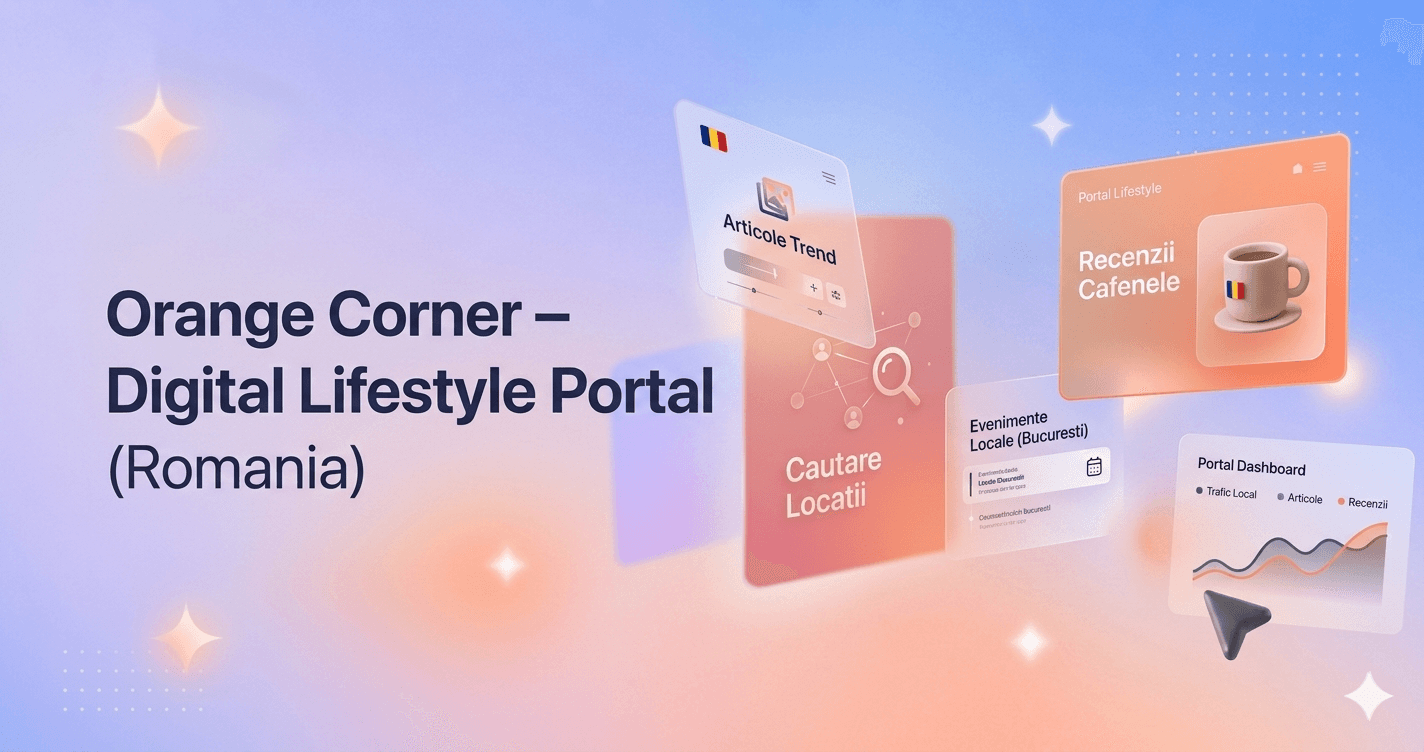
Orange Corner – Digital Lifestyle Portal (Romania)
///Lifestyle Industry
Want to keep your special version of my world ?
Click the button below
Frequently
Frequently
Frequently
Asked Questions
Asked Question
Asked Questions
What’s your design philosophy?
What’s it like working with you?
How do you approach design research and testing?
What types of projects or industries do you focus on?
How do you measure the success of a design?
How can I get in touch with you to explore a collaboration?
What’s your design philosophy?
What’s it like working with you?
How do you approach design research and testing?
What types of projects or industries do you focus on?
How do you measure the success of a design?
How can I get in touch with you to explore a collaboration?
What’s your design philosophy?
What’s it like working with you?
How do you approach design research and testing?
What types of projects or industries do you focus on?
How do you measure the success of a design?
How can I get in touch with you to explore a collaboration?
Want to keep your special version of my world ?
Click the button below
Let'S WORK
Let'S WORK
Let'S WORK
Let'S WORK
TOGETHER
TOGETHER
TOGETHER
TOGETHER